I am building it solo as an open-source project, and it is currently in active development.
The idea came from how I was using tools such as Claude Code, OpenAI Codex, and Gemini CLI. The agents are already powerful, but the workflow around them can still feel fragmented: prompts, project context, MCPs, tools, Git, reviews, and testing often live in different places.
Promptboard brings those pieces together into one structured environment.
Its purpose is to help AI agents work with clearer instructions, reusable context, the right tools, isolated workspaces, and a controlled path from idea to implementation.
The environment is built around three connected parts: Compose, Kanban, and Base. Compose prepares the task, Base provides the agent with reusable knowledge and tools, and Kanban manages how the work is executed. Together, they create a continuous workflow from an initial idea to implemented, reviewed, and tested code.
Compose — turn ideas into clear tasks
Most development work starts with something rough:
Add authentication.
Refactor this API.
Improve this dashboard.
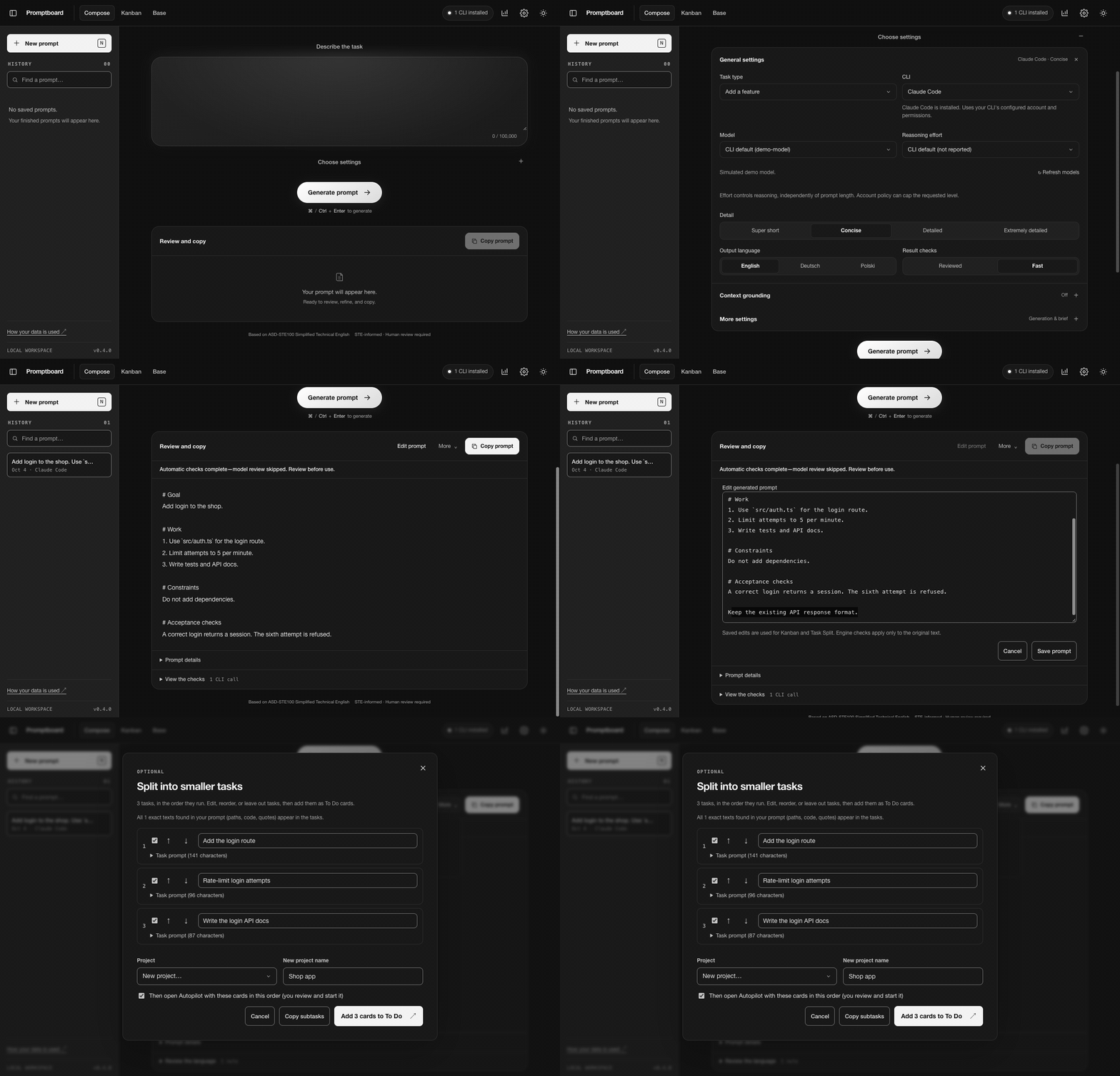
Compose turns those ideas into clearer, more structured instructions for coding agents.
Its prompt-writing approach is inspired by ASD-STE100 Simplified Technical English, using principles such as short sentences, clear terminology, active voice, explicit requirements, constraints, and acceptance checks.
The goal is simple: reduce ambiguity.
You can choose the coding CLI, model, language, and level of detail, then edit the generated prompt, send it to Kanban, or split a larger request into smaller tasks.
Idea → Structured Prompt → Development Tasks
Kanban — run the agentic workflow
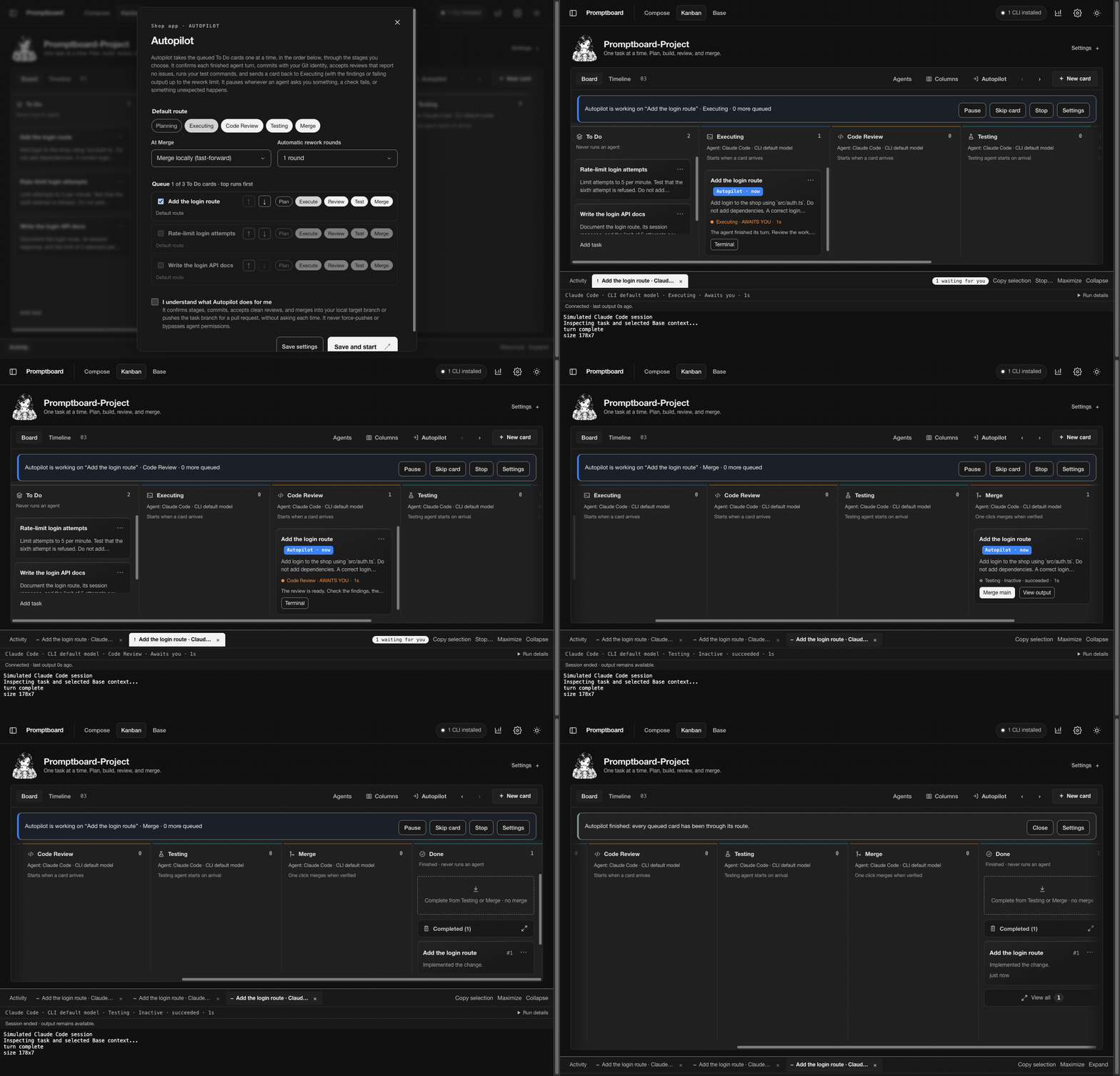
Kanban manages how tasks move through the development process:
To Do → Planning → Executing → Code Review → Testing → Merge → Done
These stages are not just visual. They can directly run AI agents.
One agent can plan the work, another can implement it, and another can review the result.
Each task can run in its own Git branch and worktree, which keeps agent work isolated and makes parallel development easier.
Promptboard also keeps review and testing connected to the actual code revision. If the code changes after review or testing, the previous verification should no longer automatically count.
The developer can inspect runs, interact through built-in terminals, request rework, and control when changes are merged.
Base — reusable resources for agents
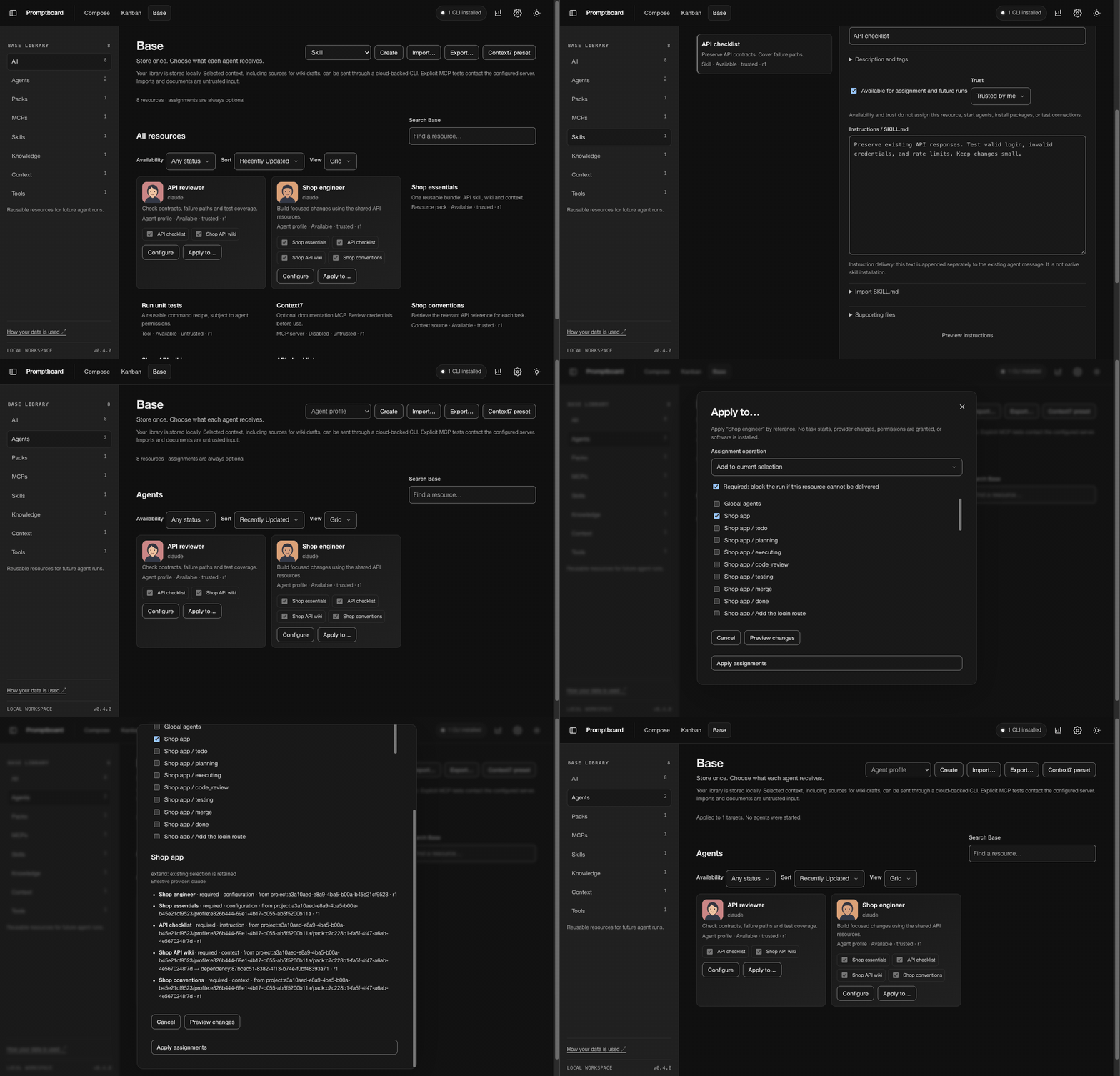
Base is the shared resource layer.
It can store:
Agents · Packs · MCPs · Skills · Knowledge · Context · Tools
Instead of rebuilding the same agent setup for every task, useful resources can be configured once and reused.
For example, a backend agent could include:
Backend Agent
→ backend instructions
→ architecture context
→ API documentation
→ testing guidelines
→ Context7
→ database MCP
→ project knowledge
Resources can be assigned to a project, workflow stage, task, or agent profile.
This makes it easier to create specialized agents for frontend, backend, research, testing, or review work.
Base also records which resources were actually supplied to an agent run, making the workflow easier to inspect and reproduce.
How it fits together
The core idea is:
Compose defines the work.
Base equips the agent.
Kanban controls the execution.
A rough idea becomes a structured task, the agent receives the right context and tools, and the work moves through planning, implementation, review, testing, and merging.
Why I am building it
I see AI agents becoming a bigger part of software development, but strong models alone are not enough.
They also need:
clear tasks · context · tools · knowledge · permissions · verification
Promptboard is my attempt to organize those pieces into one practical development environment.
It can help with:
- building features,
- fixing bugs,
- refactoring,
- creating prototypes,
- reviewing code,
- running tests,
- working on multiple tasks in parallel,
- and coordinating specialized agents.
The broader idea is simple:
Give AI agents a clear task, the right context, the right tools, and a structured environment in which to build.
Local-first
Promptboard runs locally and works with the coding CLIs and Git repositories already on the machine.
The coding intelligence comes from tools such as Claude Code, Codex, and Gemini CLI.
Promptboard provides the layer around them:
prompting · context · knowledge · MCPs · tools · Git isolation · execution · review · testing · workflow
The project is open source and still evolving as I continue building and experimenting with better ways to work with AI coding agents.
GitHub: datasound-projects/Promptboard